- Nové



 Doprava zdarma na tisíce položek
 100% bezpečné online platby
 30 dní možnost vrátit zboží
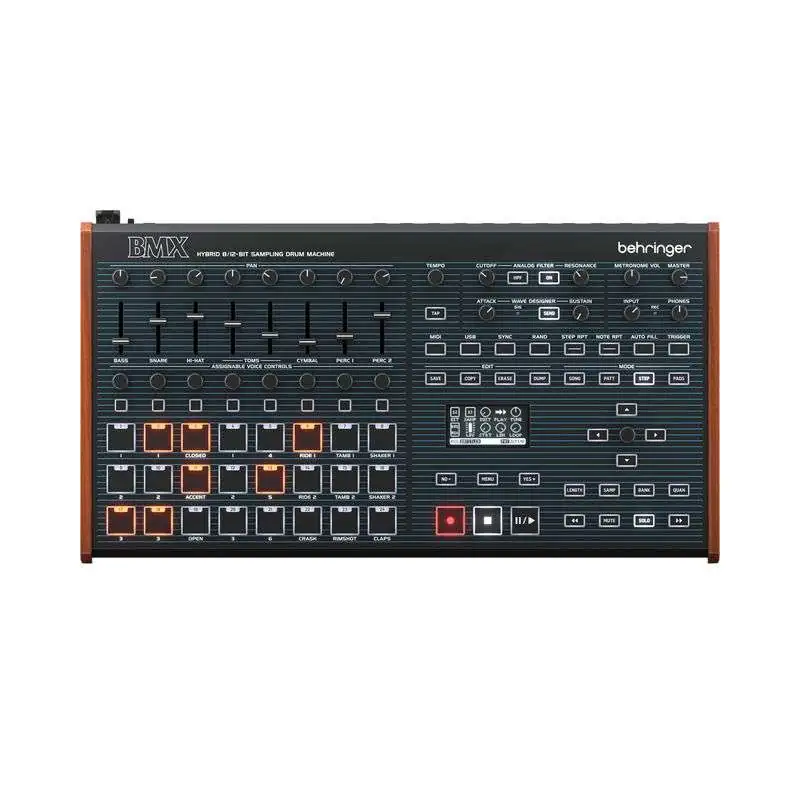
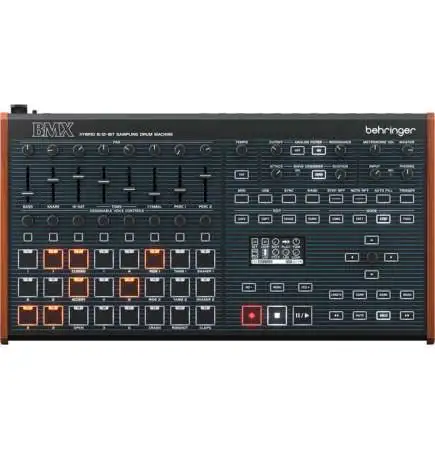
With the BMX, Behringer presents a clone of the other iconic drum machine from the pop, NDW, HipHop and EBM genres of the 80s, the Oberheim DMX, which was produced from 1980 onwards. The sounds of the DMX captured the zeitgeist of the time more than almost any other drum machine from the same era. As a result, they were often used by many of the great musicians of the time. Hits by New Order, Herbie Hancock, Run DMC, Madonna, The Police, Phil Collins, Grandmaster Flash, DMX Krew and Simple Minds prove this all too clearly.
The signal path of this 8-voice drum computer has a hybrid structure. The samples are of course digital and have a resolution of 8 or 12 bits. This doesn't sound like hi-fi, but technically it corresponds to the "crispy" sound for which the original is so highly regarded. However, each of the 8 voices also has an original analog low-pass filter, which contributes significantly to the overall warm sound. Everything comes together in the mixer section, with 8 faders each for volume and panorama control allowing a quick pre-mix directly in the device. A further parameter can be freely assigned for each sound/voice. Further parameters can be edited for each instrument at Display .
The BMX comes with all the cult sounds from DMX as well as some other popular drum sounds from the 80s. If you want a catchy "Uhhh!" Vocal sampel or a dry E3 Bass into the drum kit can use the audio input to record their own samples or import samples.
The modernized sequencer has 256 patterns for your own rhythms, which can be up to 64 steps long and can be arranged in 16 songs. Odd steps can also be programmed individually for each track(polymetry). The indispensable groove parameters Shuffle and Flam provide more funkiness. As with the original, the rhythms are entered using the 24 large keys; however, the BMX uses velocity-sensitive pads. This allows for even more accentuated sound input and, above all, programming in the TR grid. The trigger function, which repeats a preselectable range (1, 2, 4, 8 steps) of sequencer steps in step repeat mode until the button is released, is absolutely performance-oriented. Alternatively, there is Note Repeat, which triggers the selected instrument in four speed levels; perfect for spontaneously adding variety to the pattern. Contemporary innovations such as programmable probability of drum triggers and a randomizer round off the sequencer features.
The main output has two special features: firstly, there is a switchable lowpass/highpass filter with manually adjustable Cutoff and resonance, and secondly the Wave Designer; a compressor-like effect that processes the attack and decay times. Depending on the setting, the signal becomes pumping, spongy or slightly chopped. Furthermore, the 8 individual outputs enable processing by external equipment such as a Delay or Reverb effect.
Parametry